Coalition For Tigray

Coalition for Tigray is a non-profit organization dedicated to education, advocacy, and unity in service of the people of Tigray. We work to strengthen collaboration among existing nonprofits, create space for new initiatives, and foster strategic coordination so that every effort contributes to lasting impact. By organizing and aligning diverse projects under one shared vision, we aim to ensure that resources, voices, and actions move together toward justice, recovery, and sustainable development for Tigray. Through ongoing advocacy, education, and leadership, Coalition for Tigray serves as a bridge — empowering individuals, organizations, and communities to act collectively for the future of Tigray.

Explore our projects

  • Join our Tigray Advocacy committee

    Tigray Advocacy Committee is an organization dedicated to unifying and coordinating all advocacy efforts for Tigray to ensure they effectively serve the people of Tigray. The committee was established in response to the lack of cohesion and consistency in social media messaging and broader advocacy work related to Tigray. By bringing together diverse voices and initiatives under a shared vision, the Tigray Advocacy Committee aims to amplify accurate information, strengthen collective impact, and advance the interests and well-being of the Tigrayan people.

About Tigray

Tigray is a region in northern Ethiopia, home to a people with a rich history, language, and culture that date back thousands of years.

Since 2020, the people of Tigray have faced a brutal genocide marked by mass killings, starvation, sexual violence, and the destruction of entire communities. Millions have been displaced and denied basic necessities like food, water, and healthcare. The devastation has left deep scars, but the strength and resilience of Tigrayans remain unbroken.

Our mission is to unify and strengthen all advocacy and humanitarian efforts for Tigray. Too often, those working for justice and relief have been isolated in their efforts. By coming together, we can amplify truth, coordinate action, and ensure lasting impact.

Tigray Genocide

The Tigray genocide is one of the most brutal and under-recognized atrocities of the 21st century. Beginning in November 2020, Ethiopian and Eritrean forces, along with allied Amhara militias, launched a coordinated military campaign against the Tigray region in northern Ethiopia. This campaign has been characterized by widespread and systematic violence, including massacres, sexual violence, and the deliberate destruction of civilian infrastructure.

Estimates suggest that between 600,000 and 800,000 people have been killed, over 5 million people have been displaced, and 800,000-1,200,000 people have been expelled from their shelters in western Tigray and are forced to live in IDP camps under inhumane conditions.

This is genocide marked by numerous massacres targeting civilians, including the Aksum Massacre, where 700-1200 civilians were massacred in a day. Sexual violence has been used as a weapon of war, with reports of mass rapes, forced pregnancies, forced sterilization and extreme torture amounting to crimes against humanity and acts of genocide. The Commission of Inquiry on Tigray Genocide (CITG) has documented that, out of 481,201 respondents surveyed, approximately 59.5% survived at least one form of gender-based violence (GBV), with 58.4% experiencing sexual violence, including rape and sexual slavery. The report attributes 55.63% of these crimes to Eritrean forces, 35.78% to Ethiopian forces, and 5.75% to Amhara forces. The CITG concludes that these acts constitute genocide, crimes against humanity, and war crimes, and calls for urgent international accountability and support for survivors.

Despite the ceasefire declared in 2022, reports of atrocities continue, and accountability remains elusive. The international community has failed to recognize the scale of the genocide, and efforts to bring perpetrators to justice have been hindered by a lack of political will.

Current emergencies in Tigray

Three years after the height of the northern Ethiopia conflict, Tigray is in a fragile recovery phase marked by volatile security dynamics, restricted access to essential services, and overlapping natural and health shocks. While localized improvements exist, core structural problems remain unresolved. Humanitarian conditions continue to be shaped by regional geopolitical risks, disrupted livelihoods, and systemic shortages in critical infrastructure. The region’s population, already weakened by years of conflict, faces a convergence of immediate threats requiring coordinated, sustained, and adequately funded responses.

Risk of a new interstate/renewed war affecting Tigray’s borders

Ethiopia–Eritrea tensions have spiked again in late 2025, with multiple credible analyses warning that a new war could erupt and draw in regional actors—an obvious existential risk for communities along Tigray’s northern axis

Severe food insecurity with constrained aid and rising weather shocks

Global/GRFC analyses for 2025 explicitly flag Tigray among Ethiopia’s regions projected to remain in IPC3+ due to conflict impacts, price stress, and weather volatility.

Ongoing cholera outbreak in Tigray

Since September 2025, confirmed outbreaks have been reported across multiple woredas (e.g., Selewa, Samre, Mereb Lekhe), with deaths and hundreds of cases; cholera response remains an immediate public-health priority.

Floods, hail, and storm damage (late 2025)

Heavy kiremt rains and localized storms in Aug–Oct damaged farmland and displaced households around Shire and other localities; official alerts warned of flash-flood risk in northwestern/central Tigray in mid-September. These shocks compound lean-season food gaps.

Educational barriers

For the 2025/26 school year, roughly half of Tigray’s school-age children remain out of school due to damaged facilities, displacement, and protection concerns—an immediate human-capital emergency.

Displacement and blocked returns: especially Western Tigray

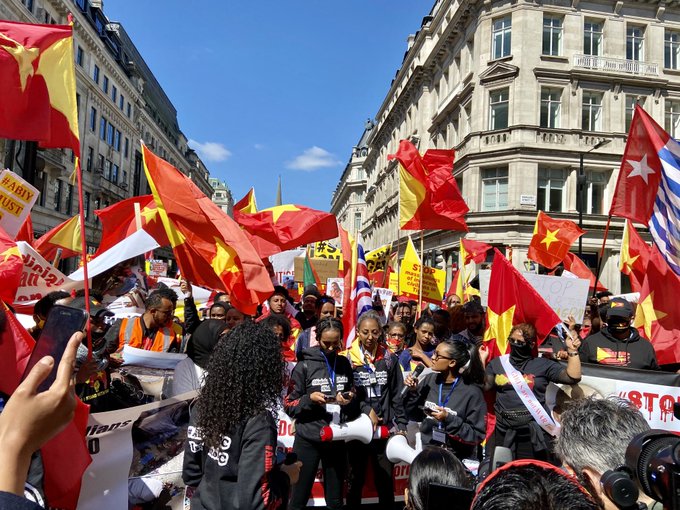
Large numbers of Tigrayan IDPs cannot return to their homes in disputed/occupied areas (Western Tigray/Welkait). Mass protests in June 2025 underscored the urgency; unresolved territorial control keeps this an acute protection and governance crisis.

Landmines and explosive remnants of war (ERW) harming civilians and livelihoods

Mine/ERW contamination is a current, daily risk; recent ICRC reporting includes 2025 victim accounts from Tigray, and humanitarian updates note contaminated fields restricting cultivation.

Health system damage and under-resourcing

WHO and partners highlight continuing post-war damage to health facilities in the north (including Tigray) and logistics gaps that impede routine and outbreak response. This remains a live, near-term constraint on life-saving care.

Ongoing protection harms and survivor needs (conflict-related sexual violence)

New 2025 documentation details the scale and persistence of CRSV trauma from the war, with accountability and survivor services still inadequate. This is a present-tense emergency for survivors and service providers.

Essential services: partial restoration, fragile access

While some banking/telecom services have gradually returned in urban centers, service restoration remains uneven and vulnerable to security/political shocks—affecting markets, remittances, and aid delivery today.

Humanitarian access and funding squeeze

OCHA’s 2025 updates flag Ethiopia’s (including Tigray’s) response as overstretched by conflict, disease, and climate shocks, with critical funding gaps forcing triage. Access is better than at the height of the war but not yet reliable